Gadi Eisenkot Tasked With Forming New Israeli Government
President Isaac Herzog has appointed Gadi Eisenkot to assemble a new government following Benjamin Netanyahu's loss of his parliamentary majority. Eisenkot faces a complex six-week window to build a coalition in a deeply polarized political landscape.
 🕌Middle East
Photo: Africanews
Key points
- Gadi Eisenkot has six weeks to form a government.
- Benjamin Netanyahu lost his parliamentary majority in recent elections.
- Arab-led parties have emerged as pivotal, albeit complicated, potential coalition partners.
President Isaac Herzog has officially tasked Gadi Eisenkot with the formation of a new Israeli government, marking a significant shift following Prime Minister Benjamin Netanyahu's failure to maintain a parliamentary majority in the recent elections. This transition occurs as the nation grapples with the profound social and political aftermath of the ongoing conflict in Gaza and the 2023 Hamas attacks.
Eisenkot enters this process without a clear parliamentary majority, necessitating complex negotiations across a fractured political spectrum. The inclusion of Arab-led parties, which achieved historic electoral gains, has introduced new variables into coalition-building efforts. Observers note that these parties could act as critical kingmakers, though their participation remains a highly sensitive and politically fraught prospect for many established factions.
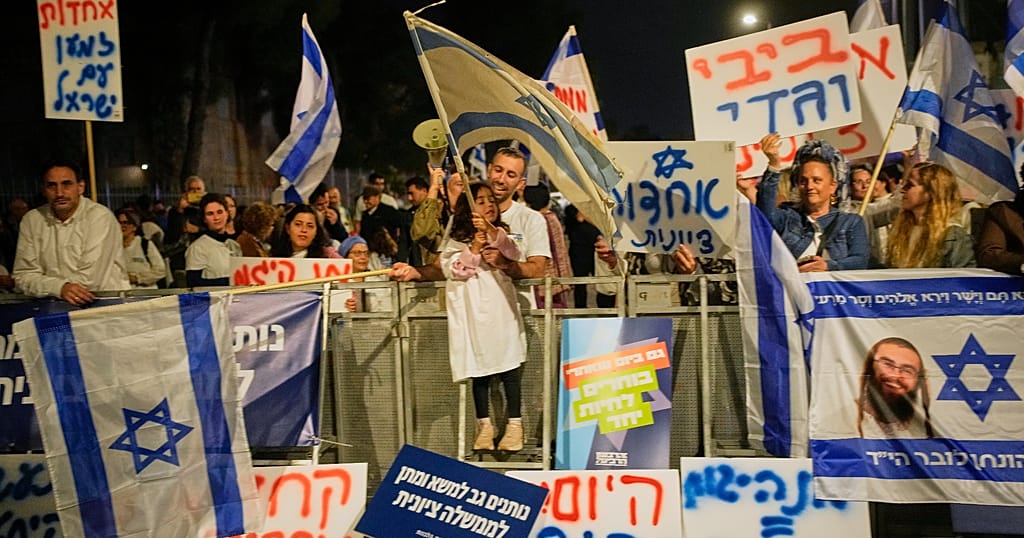
The incoming administration faces a daunting agenda, ranging from national security concerns to the preservation of democratic institutions. Public discourse in Jerusalem reflects a deep-seated desire for a change in national mentality, with citizens emphasizing the need for mutual respect and a reversal of previous judicial reform efforts initiated under the Netanyahu government. Eisenkot has been granted a six-week mandate to secure a viable coalition.
The stakes
Failure to form a government within the allotted six-week period could trigger further political instability or necessitate another round of elections. A successful coalition would signal a pivot in Israel’s domestic and judicial policy, while a failed attempt risks deepening the existing paralysis within the Knesset.
Two readings
- Supporters view the appointment as a necessary move to restore democratic norms and foster a more inclusive political culture after years of division.
- Critics argue that the lack of a clear majority makes any resulting coalition inherently unstable and incapable of addressing the country's urgent security and economic challenges.
Source Africanews — africanews.com/2026/11/08/divided-israelis-agree-forming-next-govern… ↗
Read next
 ✒️Opinion & Analysis
ICJ Rules Myanmar Military Committed Genocide Against Rohingya
The International Court of Justice has found Myanmar's military guilty of genocide against the Rohingya, a ruling that damages the international standing of both Aung San…
 🕯️Democracy & Rights
Chinese teachers face rising parental pressure over personal life choices
Chinese educators are encountering a surge in unreasonable demands from parents, including complaints regarding teachers' pregnancy and maternity leave.
 🛡️War & Security
Ukraine Restricts Media Coverage of Infrastructure Damage Amid Russian Strikes
President Volodymyr Zelenskyy has issued a decree prohibiting media outlets from reporting on the impact of Russian strikes against critical infrastructure and the status…
 🏮China & Taiwan
Beijing Reaffirms Reunification Stance Following Taiwan Local Election Results
China’s Taiwan Affairs Office declared that the island’s reunification with the mainland remains inevitable, despite recent shifts in Taiwan's local political landscape.
 🇪🇺Europe
US Air Force Repels Unauthorized Drone Incursion at RAF Lakenheath
U.S. security forces at a British air base successfully countered a group of unidentified drones, amid growing concerns over potential foreign state involvement.
 ⚖️Law & Policy
India Government Proposes 50% Increase in Parliamentary Seats and Women's Reservation
The Indian government plans to introduce legislation to expand the Lok Sabha to 850 seats and mandate a 33% reservation for women in legislative bodies.