Pakistan Shifts Mineral Strategy to Attract Global Investment
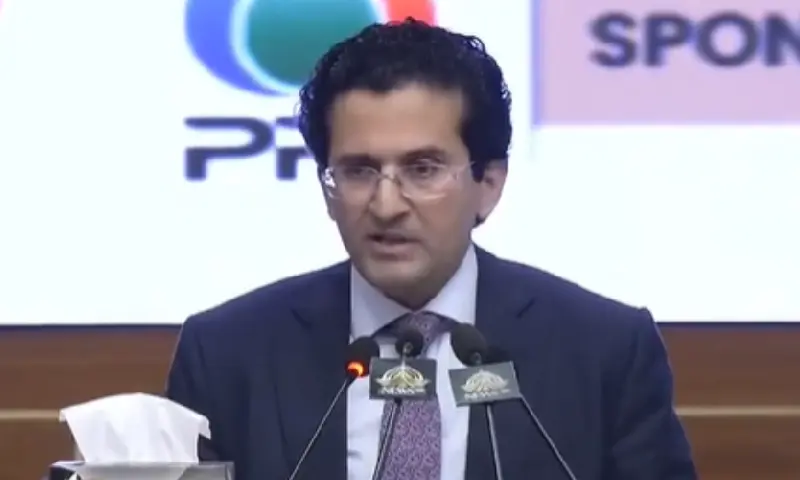
Petroleum Minister Ali Pervaiz Malik announced a pivot toward strategic mineral exploration, aiming to integrate Pakistan into the global supply chain for critical resources.
 🚢Sanctions & Trade
Photo: Dawn
Key points
- Government prioritizing exploration of strategic minerals like lithium and copper.
- Shift from raw ore exports to domestic smelting and value-added processing.
- Infrastructure projects like the Rohri-Nokundi railway are being aligned with mining goals.
Pakistan is intensifying its focus on the exploration of strategic minerals, including copper, gold, lithium, and rare earth metals, as part of a broader effort to attract international capital. During the Pakistan Minerals Investment Forum 2026 in Islamabad, Petroleum Minister Ali Pervaiz Malik emphasized that the government is transitioning from raw ore exports to domestic processing, specifically by advancing copper smelting capabilities to capture more value.
To support this initiative, the government is implementing modernized geological mapping and digitizing decades of data to minimize uncertainty for foreign investors. The minister noted that these exploration efforts, spanning from the Chagai district to Gilgit-Baltistan and Khyber Pakhtunkhwa, are being bolstered by international technical collaborations, such as the UK Pakistan Geoscience Capacity Building Programme.
Recognizing that resource extraction requires robust logistics, the government is aligning its infrastructure policy with mineral ambitions. This includes planned upgrades to the Rohri-Nokundi railway corridor and enhanced connectivity to Port Qasim, which are intended to bridge the gap between mineral-rich regions and global export markets.
The stakes
The government stands to gain significant foreign exchange and industrial development if it successfully moves up the mineral value chain. Conversely, failure to provide security and infrastructure could leave these resources untapped, while local communities in regions like Balochistan remain sensitive to large-scale industrial projects.
Two readings
- Supporters view the policy as a necessary modernization of the economy that will create jobs and reduce reliance on raw material exports.
- Critics express concern over the environmental impact of large-scale mining and the potential for social unrest in resource-rich but historically marginalized provinces.
Source Dawn — dawn.com/news/2044267/pakistans-mineral-exploration-increasingly-fo… ↗
Read next
 ✒️Opinion & Analysis
ICJ Rules Myanmar Military Committed Genocide Against Rohingya
The International Court of Justice has found Myanmar's military guilty of genocide against the Rohingya, a ruling that damages the international standing of both Aung San…
 🕯️Democracy & Rights
Chinese teachers face rising parental pressure over personal life choices
Chinese educators are encountering a surge in unreasonable demands from parents, including complaints regarding teachers' pregnancy and maternity leave.
 🛡️War & Security
Ukraine Restricts Media Coverage of Infrastructure Damage Amid Russian Strikes
President Volodymyr Zelenskyy has issued a decree prohibiting media outlets from reporting on the impact of Russian strikes against critical infrastructure and the status…
 🏮China & Taiwan
Beijing Reaffirms Reunification Stance Following Taiwan Local Election Results
China’s Taiwan Affairs Office declared that the island’s reunification with the mainland remains inevitable, despite recent shifts in Taiwan's local political landscape.
 🇪🇺Europe
US Air Force Repels Unauthorized Drone Incursion at RAF Lakenheath
U.S. security forces at a British air base successfully countered a group of unidentified drones, amid growing concerns over potential foreign state involvement.
 ⚖️Law & Policy
India Government Proposes 50% Increase in Parliamentary Seats and Women's Reservation
The Indian government plans to introduce legislation to expand the Lok Sabha to 850 seats and mandate a 33% reservation for women in legislative bodies.