Turkey and Qatar Sign Mutual Defence Pact to Coordinate Regional Security
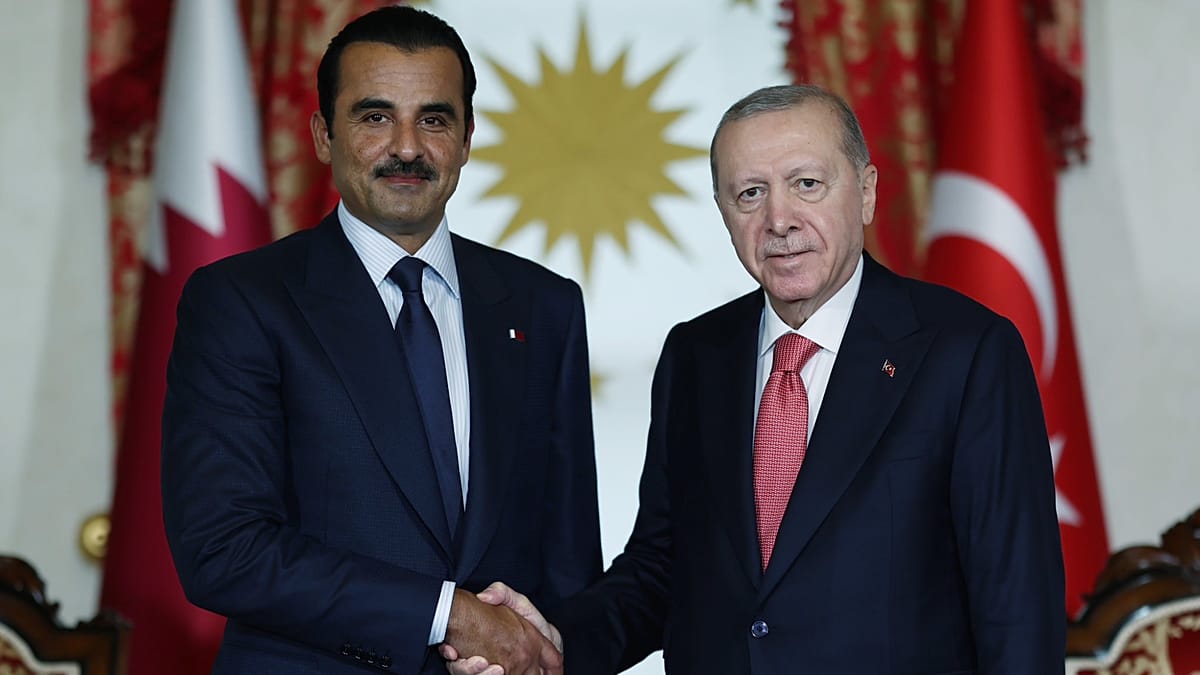
Turkey and Qatar have formalized a mutual defence agreement in Istanbul, aiming to establish a unified stance against external armed threats.
 🚢Sanctions & Trade
Photo: Euronews
Key points
- Turkey and Qatar signed a mutual defence agreement in Istanbul.
- The pact mandates a unified stance against external armed attacks and expands military cooperation.
- The agreement aligns with broader defense realignments involving Turkey, Saudi Arabia, Pakistan, and Gulf states.
Turkish President Recep Tayyip Erdogan and Qatari Emir Sheikh Tamim bin Hamad Al Thani concluded a mutual defence agreement on Friday during a meeting of the Supreme Strategic Committee in Istanbul. The pact is designed to enhance collective security and create a unified operational posture in response to external armed attacks directed at either nation.
Under the terms of the joint statement, both governments will conduct regular security consultations, execute joint military drills, expand defence industry cooperation, and coordinate personnel training programs. Alongside the defence accord, the two leaders finalized additional bilateral agreements covering trade, energy, diplomacy, education, and culture, while also addressing ongoing geopolitical crises in Gaza, Syria, and Libya.
The agreement emerges amid a broader realignment of security architecture across the Middle East and South Asia. As traditional security guarantees from Western powers face shifting strategic priorities, regional actors have increasingly pursued supplementary bilateral and multilateral pacts, including recent defence arrangements involving Turkey, Saudi Arabia, Pakistan, Kuwait, and Indonesia.
The stakes
Ankara and Doha stand to gain deeper military and industrial integration, reinforcing their geopolitical influence across the Middle East. Opponents or rival regional powers may view the bloc as an assertive counterweight that could heighten regional polarization, while the long-term efficacy of the pact depends on how it coordinates with broader security frameworks.
Two readings
- Supporters read the agreement as a vital step toward regional stability, indigenous defense collaboration, and peaceful deterrence against external aggression.
- Critics read the pact as a divisive move that accelerates regional militarization and complicates existing security architectures.
Source Euronews — euronews.com/2026/11/14/qatar-and-turkey-sign-defence-agreement-for… ↗
Read next
 ✒️Opinion & Analysis
ICJ Rules Myanmar Military Committed Genocide Against Rohingya
The International Court of Justice has found Myanmar's military guilty of genocide against the Rohingya, a ruling that damages the international standing of both Aung San…
 🕯️Democracy & Rights
Chinese teachers face rising parental pressure over personal life choices
Chinese educators are encountering a surge in unreasonable demands from parents, including complaints regarding teachers' pregnancy and maternity leave.
 🛡️War & Security
Ukraine Restricts Media Coverage of Infrastructure Damage Amid Russian Strikes
President Volodymyr Zelenskyy has issued a decree prohibiting media outlets from reporting on the impact of Russian strikes against critical infrastructure and the status…
 🏮China & Taiwan
Beijing Reaffirms Reunification Stance Following Taiwan Local Election Results
China’s Taiwan Affairs Office declared that the island’s reunification with the mainland remains inevitable, despite recent shifts in Taiwan's local political landscape.
 🇪🇺Europe
US Air Force Repels Unauthorized Drone Incursion at RAF Lakenheath
U.S. security forces at a British air base successfully countered a group of unidentified drones, amid growing concerns over potential foreign state involvement.
 ⚖️Law & Policy
India Government Proposes 50% Increase in Parliamentary Seats and Women's Reservation
The Indian government plans to introduce legislation to expand the Lok Sabha to 850 seats and mandate a 33% reservation for women in legislative bodies.