Cato Institute Challenges Trump Administration Canadian Tariffs in Court
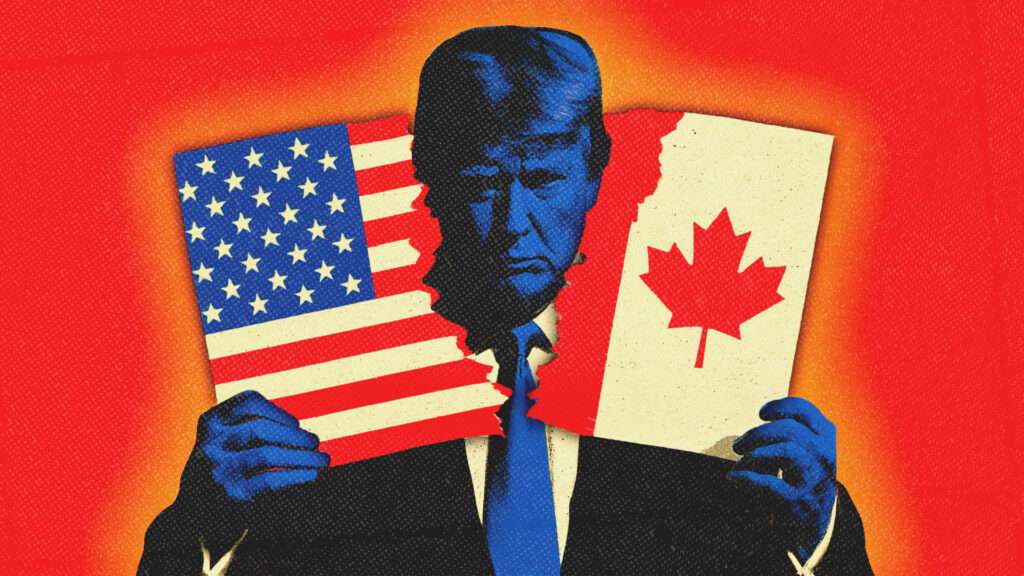
The Cato Institute filed an amicus brief contesting the administration's 50 percent Section 338 tariffs on Canadian imports before the US Court of International Trade.
 🚢Sanctions & Trade
Photo: Reason
Key points
- Cato Institute files amicus brief against 50 percent Canadian tariffs.
- Challenge argues Section 338 requires direct offsetting of foreign trade barriers.
- Lawsuit invokes major questions and nondelegation doctrines against executive overreach.
The Cato Institute, alongside legal scholars, submitted an amicus brief to the US Court of International Trade in the case Gellert Global Corp. v. Trump, mounting a legal challenge against the administration's sweeping 50 percent tariffs on Canadian imports enacted under Section 338 of the Tariff Act of 1930. The legal action follows a previous Supreme Court ruling that invalidated separate tariffs imposed under the International Emergency Economic Powers Act.
Represented in the broader litigation by the Liberty Justice Center, the plaintiffs argue that the Section 338 duties exceed executive authority and violate foundational administrative law doctrines. The newly submitted brief contends that the statute requires tariffs to directly offset foreign discriminatory trade practices rather than serve as broad economic measures, and maintains that the legislation has been superseded by newer trade statutes.
Furthermore, the filing invokes the major questions and nondelegation doctrines, asserting that Congress did not explicitly grant the executive branch the sweeping power to levy extraordinary import taxes of up to 50 percent without clear statutory limits. Legal representatives and scholars assisting with the brief argue that applying the statute in this manner expands presidential authority far beyond its intended legislative boundaries.
The stakes
A judicial ruling against the Section 338 tariffs would restrict executive branch leverage in trade policy and force the administration to rely on explicit congressional approval for major tariff actions, potentially shifting economic power back to the legislative branch while altering trade relations with Canada.
Two readings
- Supporters read the challenge as a necessary defense of the separation of powers and statutory limits against overreaching executive trade measures.
- Critics read the challenge as an effort by libertarian legal organizations to undermine legitimate executive tools designed to protect domestic industries from foreign trade barriers.
Source Reason — reason.com/volokh/2026/11/14/our-amicus-brief-in-case-challenging-trump… ↗
Read next
 ✒️Opinion & Analysis
ICJ Rules Myanmar Military Committed Genocide Against Rohingya
The International Court of Justice has found Myanmar's military guilty of genocide against the Rohingya, a ruling that damages the international standing of both Aung San…
 🕯️Democracy & Rights
Chinese teachers face rising parental pressure over personal life choices
Chinese educators are encountering a surge in unreasonable demands from parents, including complaints regarding teachers' pregnancy and maternity leave.
 🛡️War & Security
Ukraine Restricts Media Coverage of Infrastructure Damage Amid Russian Strikes
President Volodymyr Zelenskyy has issued a decree prohibiting media outlets from reporting on the impact of Russian strikes against critical infrastructure and the status…
 🏮China & Taiwan
Beijing Reaffirms Reunification Stance Following Taiwan Local Election Results
China’s Taiwan Affairs Office declared that the island’s reunification with the mainland remains inevitable, despite recent shifts in Taiwan's local political landscape.
 🇪🇺Europe
US Air Force Repels Unauthorized Drone Incursion at RAF Lakenheath
U.S. security forces at a British air base successfully countered a group of unidentified drones, amid growing concerns over potential foreign state involvement.
 ⚖️Law & Policy
India Government Proposes 50% Increase in Parliamentary Seats and Women's Reservation
The Indian government plans to introduce legislation to expand the Lok Sabha to 850 seats and mandate a 33% reservation for women in legislative bodies.