APEC Summit Faces Diminished Ambitions Amid US Tariff Expansion
The APEC summit in Shenzhen is struggling to find common ground as US protectionist policies and geopolitical tensions among major powers hinder cooperation.
 🚢Sanctions & Trade
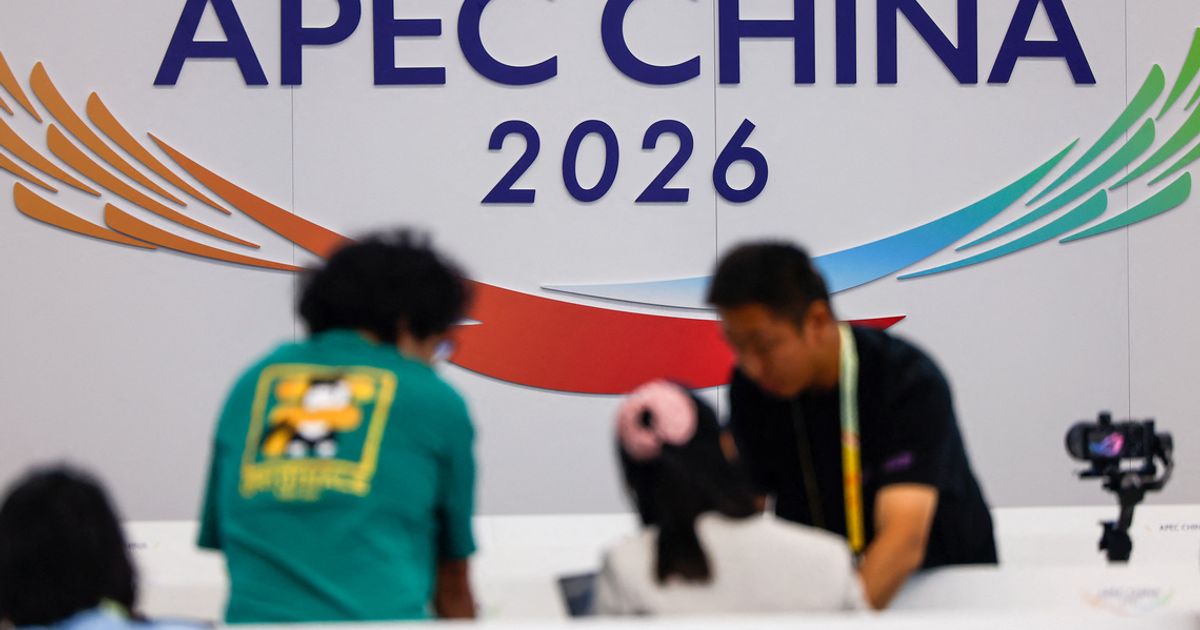
Photo: Straits Times Asia
Key points
- APEC summit overshadowed by US-China-Russia tensions.
- US continues tariff expansion despite domestic political pushback.
- Nations like Canada and Brazil are aggressively seeking non-US trade partners.
The Asia-Pacific Economic Cooperation (APEC) summit in Shenzhen is convening under the shadow of intensifying geopolitical rivalries and the continued implementation of US trade tariffs. Despite the organization representing over half of global commerce, analysts suggest that the summit's agenda remains limited due to deep-seated friction between the United States, China, and Russia. Recent diplomatic engagement has also waned, highlighted by the absence of US Treasury Secretary Scott Bessent at a preliminary finance meeting in Hong Kong.
The US administration continues to pursue an aggressive trade strategy, imposing new tariffs as high as 12.5% on 60 economies under the guise of combating forced labor, even after previous customs duties were challenged by the Supreme Court. Experts note that the administration appears unmoved by domestic political pressure, signaling a sustained commitment to protectionist measures that affect both Asian and Latin American partners.
In response to Washington's trade stance, nations are actively seeking to diversify their economic alliances. Canadian Prime Minister Mark Carney recently announced a new free-trade pact with the Philippines and ongoing negotiations with ASEAN to reduce reliance on the US market. Similarly, Brazilian President Luiz Inacio Lula da Silva emphasized the necessity of finding alternative trading partners to mitigate the impact of American tariffs, noting significant growth in trade with Indonesia and Vietnam.
The stakes
The persistence of US trade barriers is forcing a realignment of global supply chains, pushing middle-power nations to prioritize regional pacts like the RCEP. While this shift aims to insulate these economies from American protectionism, the effectiveness of such agreements remains limited by weaker enforcement mechanisms and the ongoing economic volatility originating from China.
Two readings
- Supporters of the current US trade policy argue that aggressive tariffs are a necessary tool to address unfair labor practices and protect domestic industries from global economic imbalances.
- Critics contend that the administration's unilateral approach is alienating key allies and forcing a fragmentation of the global trading system that threatens long-term economic stability.
Source Straits Times Asia — straitstimes.com/asia/east-asia/trumps-tariffs-cast-shadow-over-ape… ↗
Read next
 ✒️Opinion & Analysis
ICJ Rules Myanmar Military Committed Genocide Against Rohingya
The International Court of Justice has found Myanmar's military guilty of genocide against the Rohingya, a ruling that damages the international standing of both Aung San…
 🕯️Democracy & Rights
Chinese teachers face rising parental pressure over personal life choices
Chinese educators are encountering a surge in unreasonable demands from parents, including complaints regarding teachers' pregnancy and maternity leave.
 🛡️War & Security
Ukraine Restricts Media Coverage of Infrastructure Damage Amid Russian Strikes
President Volodymyr Zelenskyy has issued a decree prohibiting media outlets from reporting on the impact of Russian strikes against critical infrastructure and the status…
 🏮China & Taiwan
Beijing Reaffirms Reunification Stance Following Taiwan Local Election Results
China’s Taiwan Affairs Office declared that the island’s reunification with the mainland remains inevitable, despite recent shifts in Taiwan's local political landscape.
 🇪🇺Europe
US Air Force Repels Unauthorized Drone Incursion at RAF Lakenheath
U.S. security forces at a British air base successfully countered a group of unidentified drones, amid growing concerns over potential foreign state involvement.
 ⚖️Law & Policy
India Government Proposes 50% Increase in Parliamentary Seats and Women's Reservation
The Indian government plans to introduce legislation to expand the Lok Sabha to 850 seats and mandate a 33% reservation for women in legislative bodies.