China Expands Production of High-Performance Rare-Earth Rubber for EV Sector
China is scaling up production of rare-earth cis-butadiene rubber, a material offering superior performance for electric vehicle tires, as it seeks to tighten its grip on the EV supply chain.
 🚢Sanctions & Trade
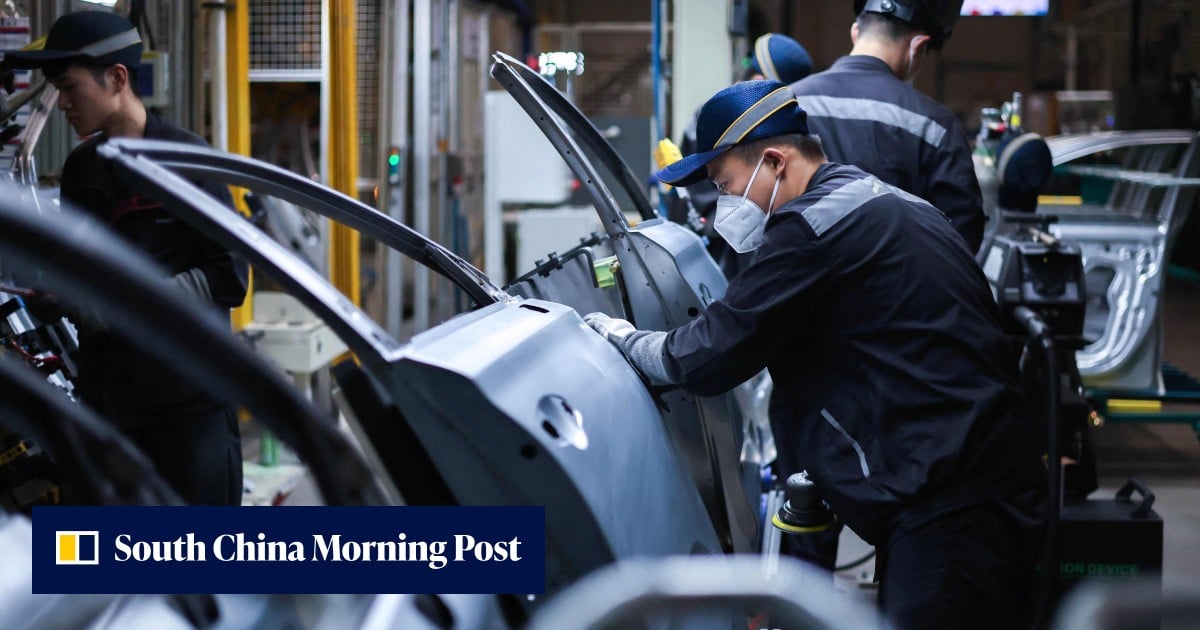
Photo: SCMP China
Key points
- China scales up production of high-performance ND9106 rare-earth rubber.
- Material offers improved wear resistance and efficiency for electric vehicle tires.
- Strategic focus on material supply chains to bolster the domestic EV industry.
China is moving to increase the domestic supply of high-performance rare-earth cis-butadiene rubber, a strategic material poised to enhance the efficiency and durability of electric vehicle tires. Market data from the China Rubber Industry Association indicates that the ND9106 grade of this material is commanding a significant price premium, trading at 22,500 yuan per tonne compared to 16,660 yuan for standard synthetic rubber alternatives.
The push to scale up production aims to integrate this advanced material more deeply into the automotive manufacturing sector. Rare-earth rubber provides distinct technical advantages over conventional synthetic options, including superior wear resistance, increased structural strength, and lower rolling resistance. These properties are particularly valuable for electric vehicles, which require specialized components to maximize battery range and handle the weight of heavy battery packs.
The expansion of domestic production could help make the material more widely available.
By securing a robust domestic supply chain for this specialized rubber, Beijing aims to strengthen its competitive edge in the global electric vehicle market. As the automotive industry shifts toward electrification, control over the specialized materials required for high-performance components has become a key component of national industrial policy.
The stakes
The primary beneficiaries are Chinese domestic tire manufacturers and the broader EV supply chain, which will gain access to higher-quality components at scale. Conversely, international competitors may face increased pressure as China solidifies its dominance in the production of specialized EV materials, potentially shifting global market dynamics in the automotive sector.
Two readings
- Supporters view this as a necessary strategic move to enhance the quality and efficiency of domestic electric vehicles while reducing reliance on foreign-sourced materials.
- Critics argue that state-led efforts to control specialized supply chains could lead to market distortions and increase trade tensions with international partners.
Source SCMP China — scmp.com/news/china/science/article/3373791/china-eyes-new-grip-ev-… ↗
Read next
 ✒️Opinion & Analysis
ICJ Rules Myanmar Military Committed Genocide Against Rohingya
The International Court of Justice has found Myanmar's military guilty of genocide against the Rohingya, a ruling that damages the international standing of both Aung San…
 🕯️Democracy & Rights
Chinese teachers face rising parental pressure over personal life choices
Chinese educators are encountering a surge in unreasonable demands from parents, including complaints regarding teachers' pregnancy and maternity leave.
 🛡️War & Security
Ukraine Restricts Media Coverage of Infrastructure Damage Amid Russian Strikes
President Volodymyr Zelenskyy has issued a decree prohibiting media outlets from reporting on the impact of Russian strikes against critical infrastructure and the status…
 🏮China & Taiwan
Beijing Reaffirms Reunification Stance Following Taiwan Local Election Results
China’s Taiwan Affairs Office declared that the island’s reunification with the mainland remains inevitable, despite recent shifts in Taiwan's local political landscape.
 🇪🇺Europe
US Air Force Repels Unauthorized Drone Incursion at RAF Lakenheath
U.S. security forces at a British air base successfully countered a group of unidentified drones, amid growing concerns over potential foreign state involvement.
 ⚖️Law & Policy
India Government Proposes 50% Increase in Parliamentary Seats and Women's Reservation
The Indian government plans to introduce legislation to expand the Lok Sabha to 850 seats and mandate a 33% reservation for women in legislative bodies.