Uzbekistan and Kazakhstan Reopen Key Border Crossing to Boost Trade
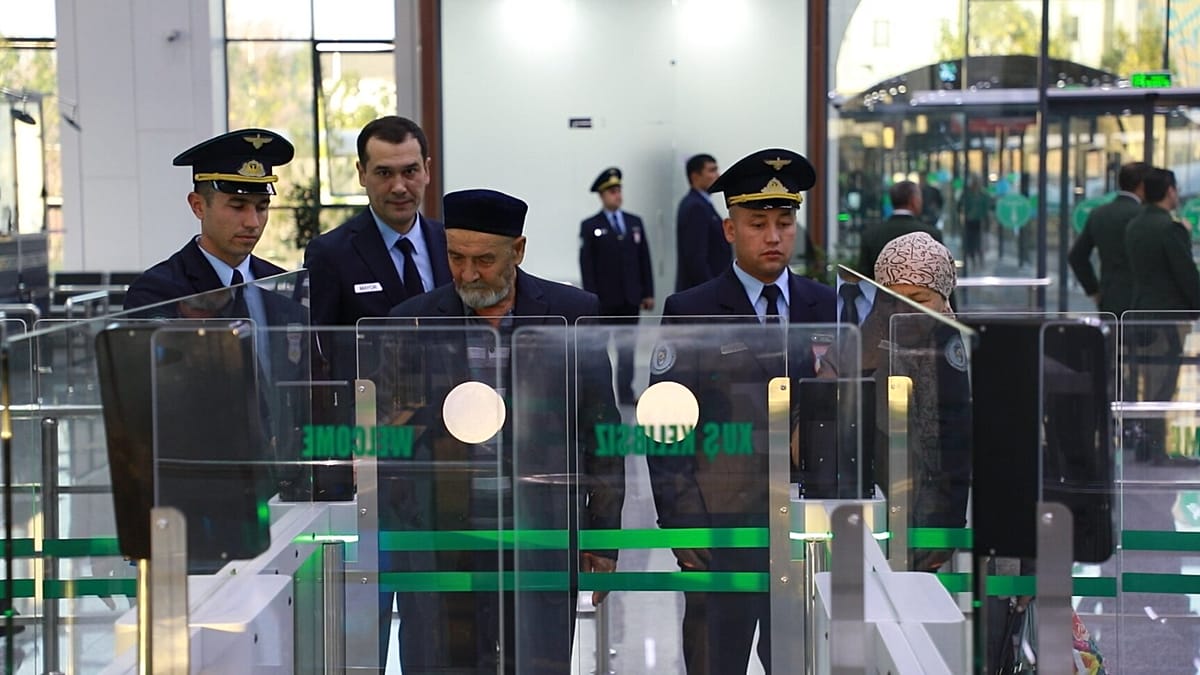
Uzbekistan and Kazakhstan have reopened the modernized Gishtkuprik–Zhibek Zholy border checkpoint to accommodate up to 100,000 travellers daily, supporting regional economic integration and the European Union's Middle Corridor initiative.
 🚢Sanctions & Trade
Photo: Euronews
Key points
- Gishtkuprik–Zhibek Zholy checkpoint reopened after two years of reconstruction.
- Facility designed to handle up to 100,000 travellers daily during peak periods.
- Move supports bilateral trade goals of $10 billion by 2030 and EU Middle Corridor initiatives.
Uzbekistan and Kazakhstan have officially reopened one of Central Asia's busiest border checkpoints following nearly two years of extensive reconstruction. Located near the Uzbek capital of Tashkent, the modernized Gishtkuprik–Zhibek Zholy facility is now engineered to handle between 70,000 and 100,000 travellers daily during peak periods, significantly improving regional mobility.
The reopening aligns with broader efforts by Central Asia's two largest economies to deepen bilateral trade and tourism, with a stated goal of reaching $10 billion in annual trade by 2030. Bilateral trade grew by 20 percent in the first ten months of 2026, reaching $4.4 billion. While the crossing serves pedestrians, cars, and buses rather than commercial trucks, the upgrade permits the redistribution of traffic away from the nearby Navoi checkpoint, thereby facilitating commercial freight transit across the border.
The modernization coincides with broader geopolitical and infrastructural shifts, including the European Union's push to develop the Middle Corridor. Meeting in Brussels, regional representatives advanced plans to strengthen transport and energy networks connecting Central Asia with European markets across the Caspian Sea, aiming to triple trade flows along the route by the end of the decade.
The stakes
Traders, tourists, and government officials stand to gain from reduced waiting times and streamlined customs procedures, while logistics networks across Central Asia benefit from unclogged freight routes. If the infrastructure fails to manage projected traffic surges, regional supply chains and tourism targets could face bottlenecks, potentially stalling wider EU-backed economic connectivity goals.
Two readings
- Supporters view the modernized checkpoint as a vital catalyst for regional integration, trade expansion, and smoother cross-border mobility.
- Critics argue that focusing primarily on passenger transit leaves critical regional freight constraints dependent on secondary crossings.
Source Euronews — euronews.com/2026/11/27/uzbekistan-and-kazakhstan-reopen-key-border… ↗
Read next
 ✒️Opinion & Analysis
ICJ Rules Myanmar Military Committed Genocide Against Rohingya
The International Court of Justice has found Myanmar's military guilty of genocide against the Rohingya, a ruling that damages the international standing of both Aung San…
 🕯️Democracy & Rights
Chinese teachers face rising parental pressure over personal life choices
Chinese educators are encountering a surge in unreasonable demands from parents, including complaints regarding teachers' pregnancy and maternity leave.
 🛡️War & Security
Ukraine Restricts Media Coverage of Infrastructure Damage Amid Russian Strikes
President Volodymyr Zelenskyy has issued a decree prohibiting media outlets from reporting on the impact of Russian strikes against critical infrastructure and the status…
 🏮China & Taiwan
Beijing Reaffirms Reunification Stance Following Taiwan Local Election Results
China’s Taiwan Affairs Office declared that the island’s reunification with the mainland remains inevitable, despite recent shifts in Taiwan's local political landscape.
 🇪🇺Europe
US Air Force Repels Unauthorized Drone Incursion at RAF Lakenheath
U.S. security forces at a British air base successfully countered a group of unidentified drones, amid growing concerns over potential foreign state involvement.
 ⚖️Law & Policy
India Government Proposes 50% Increase in Parliamentary Seats and Women's Reservation
The Indian government plans to introduce legislation to expand the Lok Sabha to 850 seats and mandate a 33% reservation for women in legislative bodies.