Venezuela Signs Preliminary Agreement for ExxonMobil Return
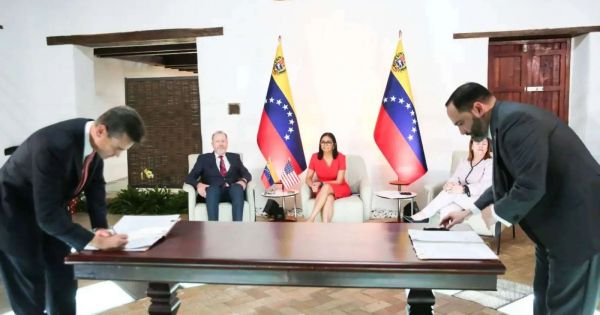
The Venezuelan government has signed a memorandum of understanding with ExxonMobil, signaling a potential return for the energy giant nearly two decades after its exit.
 🚢Sanctions & Trade
Photo: MercoPress
Key points
- Venezuela and ExxonMobil sign a non-binding memorandum of understanding.
- The agreement follows legislative reforms intended to attract foreign investment.
- ExxonMobil previously exited Venezuela in 2007 during the nationalization of the oil sector.
Venezuela has entered into a memorandum of understanding with ExxonMobil, marking a significant shift in the country's energy policy following the departure of the U.S. firm in 2007. The agreement, signed in Caracas by acting President Delcy Rodríguez and ExxonMobil Upstream President Dan Ammann, outlines a framework for potential cooperation in both existing and undeveloped oil fields.
While the document does not constitute a binding contract or specify investment timelines, officials described the move as a crucial step toward reintegrating international expertise into the nation's oil sector. Rodríguez emphasized that the deal aims to leverage ExxonMobil's technological capacity to tap into Venezuela's vast reserves, noting that negotiations have been ongoing for several months.
This development follows a major pivot in Caracas's diplomatic and economic stance. Just over a year ago, Rodríguez had publicly accused the company of conspiring against Venezuelan territorial interests. The current rapprochement aligns with recent reforms to the hydrocarbons law, which have been designed to attract foreign capital following the change in government earlier this year.
The stakes
The return of ExxonMobil would signify a major shift in Venezuela's economic landscape, potentially stabilizing the energy sector and providing the government with much-needed revenue. While the state stands to gain from increased production and technical expertise, the success of this partnership depends on the long-term stability of the new political administration and the company's ability to navigate the country's complex regulatory environment.
Two readings
- Supporters view this as a pragmatic necessity to revitalize a struggling industry and restore international confidence in the Venezuelan economy.
- Critics remain wary of the rapid policy reversal, questioning whether the government can maintain consistent legal protections for foreign investors after years of nationalization.
Source MercoPress — en.mercopress.com/2026/11/10/venezuela-signs-a-memorandum-with-exxonmob… ↗
Read next
 ✒️Opinion & Analysis
ICJ Rules Myanmar Military Committed Genocide Against Rohingya
The International Court of Justice has found Myanmar's military guilty of genocide against the Rohingya, a ruling that damages the international standing of both Aung San…
 🕯️Democracy & Rights
Chinese teachers face rising parental pressure over personal life choices
Chinese educators are encountering a surge in unreasonable demands from parents, including complaints regarding teachers' pregnancy and maternity leave.
 🛡️War & Security
Ukraine Restricts Media Coverage of Infrastructure Damage Amid Russian Strikes
President Volodymyr Zelenskyy has issued a decree prohibiting media outlets from reporting on the impact of Russian strikes against critical infrastructure and the status…
 🏮China & Taiwan
Beijing Reaffirms Reunification Stance Following Taiwan Local Election Results
China’s Taiwan Affairs Office declared that the island’s reunification with the mainland remains inevitable, despite recent shifts in Taiwan's local political landscape.
 🇪🇺Europe
US Air Force Repels Unauthorized Drone Incursion at RAF Lakenheath
U.S. security forces at a British air base successfully countered a group of unidentified drones, amid growing concerns over potential foreign state involvement.
 ⚖️Law & Policy
India Government Proposes 50% Increase in Parliamentary Seats and Women's Reservation
The Indian government plans to introduce legislation to expand the Lok Sabha to 850 seats and mandate a 33% reservation for women in legislative bodies.