Pakistan Government and Jamaat-i-Islami Near Agreement on Fuel Levy Relief
The Pakistani government and the Jamaat-i-Islami party have reached a basic outline for a potential agreement regarding petroleum levy reductions and expanded fuel relief.
 🚢Sanctions & Trade
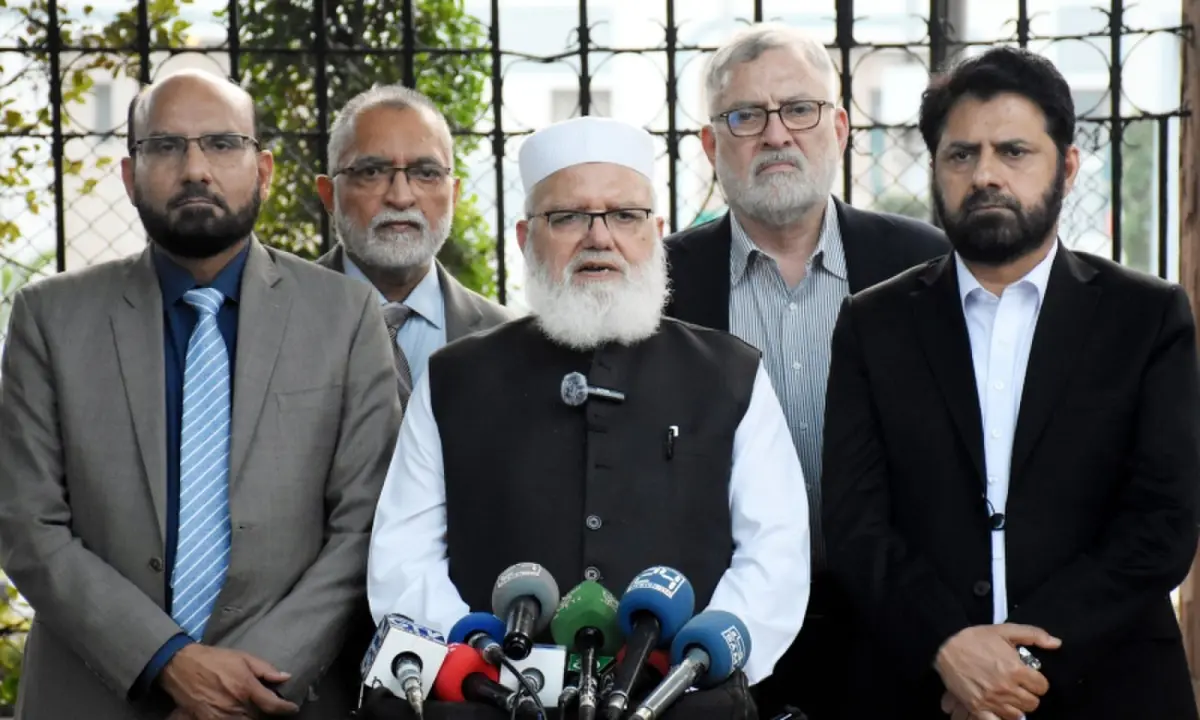
Photo: Dawn
Key points
- JI and government officials have drafted a preliminary agreement on fuel levy relief.
- Proposed measures include expanding subsidies to the agricultural sector and smaller vehicles.
- The JI has threatened to resume nationwide protests if a final deal is not reached.
The Pakistani government and the Jamaat-i-Islami (JI) party have reached a preliminary agreement on the framework for potential petroleum levy relief, following their tenth round of formal negotiations. JI Vice Emir Liaqat Baloch stated that both sides have moved into the final stages of drafting a proposal, which aims to address public concerns over rising fuel costs that have surged due to regional conflicts.
The ongoing talks, held at the Ministry of Foreign Affairs, focused on expanding existing fuel subsidies and developing a mechanism to phase out the petroleum levy. The JI has specifically proposed extending relief measures to the agricultural sector, including tractors, and to vehicles with engines up to 1,000cc. While the government acknowledged the legitimacy of these demands, it cited significant financial constraints and existing obligations to the International Monetary Fund (IMF), which has previously advocated for the removal of fuel subsidies.
The stakes
If a formal agreement is reached, the government risks friction with the IMF, which opposes fuel subsidies due to fiscal pressures, while the JI gains a political victory by securing tangible relief for its base. Failure to finalize the deal could lead to the resumption of the JI’s nationwide protest march, potentially destabilizing the government's current economic agenda.
Two readings
- Supporters of the deal argue that it provides essential relief to low-income citizens and farmers who are currently struggling under the weight of high inflation and energy costs.
- Critics suggest that the government is yielding to populist pressure, which could jeopardize fiscal stability and complicate necessary negotiations with international lenders.
Source Dawn — dawn.com/news/2043556/ji-govt-agree-on-basic-outline-of-proposal-fo… ↗
Read next
 ✒️Opinion & Analysis
ICJ Rules Myanmar Military Committed Genocide Against Rohingya
The International Court of Justice has found Myanmar's military guilty of genocide against the Rohingya, a ruling that damages the international standing of both Aung San…
 🕯️Democracy & Rights
Chinese teachers face rising parental pressure over personal life choices
Chinese educators are encountering a surge in unreasonable demands from parents, including complaints regarding teachers' pregnancy and maternity leave.
 🛡️War & Security
Ukraine Restricts Media Coverage of Infrastructure Damage Amid Russian Strikes
President Volodymyr Zelenskyy has issued a decree prohibiting media outlets from reporting on the impact of Russian strikes against critical infrastructure and the status…
 🏮China & Taiwan
Beijing Reaffirms Reunification Stance Following Taiwan Local Election Results
China’s Taiwan Affairs Office declared that the island’s reunification with the mainland remains inevitable, despite recent shifts in Taiwan's local political landscape.
 🇪🇺Europe
US Air Force Repels Unauthorized Drone Incursion at RAF Lakenheath
U.S. security forces at a British air base successfully countered a group of unidentified drones, amid growing concerns over potential foreign state involvement.
 ⚖️Law & Policy
India Government Proposes 50% Increase in Parliamentary Seats and Women's Reservation
The Indian government plans to introduce legislation to expand the Lok Sabha to 850 seats and mandate a 33% reservation for women in legislative bodies.