Iran Signs Rail Modernization and Renewable Energy Agreements
The Iranian government has finalized three memoranda of understanding to modernize its rail fleet and integrate solar energy into transport infrastructure.
 🚢Sanctions & Trade
Photo: Tehran Times
Key points
- Iran signs three MOUs to modernize rail fleet and boost renewable energy.
- Projects include solar plants on rail land and the addition of 36 battery-powered locomotives.
- Minister Farzaneh Sadegh highlights rail development as a key pillar for national resilience.
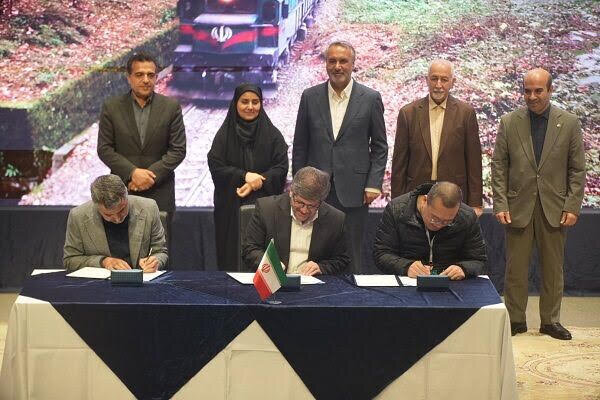
The Iranian Ministry of Transport and Urban Development announced the signing of three major memoranda of understanding (MOUs) during the 19th International Rail Transport Conference. These agreements, supported by the Islamic Republic of Iran Railways, aim to revitalize the nation's rail capacity through fleet modernization and the adoption of renewable energy technologies.
The initiatives include a partnership with the Renewable Energy and Energy Efficiency Organization to construct solar power plants on underutilized railway lands. Additionally, a deal with Niruafarin Aras Energy Company involves the procurement and operation of 36 battery-powered locomotives, while a separate agreement with Sadid Fam and Rezvan Power Electronics Industries focuses on refurbishing 24 currently non-operational locomotives.
Minister of Transport Farzaneh Sadegh emphasized that these projects are critical for enhancing national resilience and maintaining supply chain continuity. Highlighting the strategic importance of rail corridors, the minister noted that the development of transport infrastructure remains a priority for the government, particularly to mitigate the impact of past infrastructure damage and to secure essential logistics networks.
The stakes
The successful implementation of these agreements would allow Iran to increase its freight and passenger capacity while reducing reliance on fossil fuels. The government stands to gain improved logistical efficiency and regional connectivity, though the project's success depends heavily on the ability to attract private-sector investment and navigate ongoing international sanctions that complicate foreign technology partnerships.
Two readings
- Supporters argue that these investments are essential for modernizing aging infrastructure and securing the country's economic resilience against external pressures.
- Critics may point to the reliance on foreign and private-sector consortiums as a sign of state-led economic struggle, questioning whether the ambitious targets can be met under current geopolitical constraints.
Source Tehran Times — tehrantimes.com/news/532049/International-rail-conference-sees-3-MO… ↗
Read next
 ✒️Opinion & Analysis
ICJ Rules Myanmar Military Committed Genocide Against Rohingya
The International Court of Justice has found Myanmar's military guilty of genocide against the Rohingya, a ruling that damages the international standing of both Aung San…
 🕯️Democracy & Rights
Chinese teachers face rising parental pressure over personal life choices
Chinese educators are encountering a surge in unreasonable demands from parents, including complaints regarding teachers' pregnancy and maternity leave.
 🛡️War & Security
Ukraine Restricts Media Coverage of Infrastructure Damage Amid Russian Strikes
President Volodymyr Zelenskyy has issued a decree prohibiting media outlets from reporting on the impact of Russian strikes against critical infrastructure and the status…
 🏮China & Taiwan
Beijing Reaffirms Reunification Stance Following Taiwan Local Election Results
China’s Taiwan Affairs Office declared that the island’s reunification with the mainland remains inevitable, despite recent shifts in Taiwan's local political landscape.
 🇪🇺Europe
US Air Force Repels Unauthorized Drone Incursion at RAF Lakenheath
U.S. security forces at a British air base successfully countered a group of unidentified drones, amid growing concerns over potential foreign state involvement.
 ⚖️Law & Policy
India Government Proposes 50% Increase in Parliamentary Seats and Women's Reservation
The Indian government plans to introduce legislation to expand the Lok Sabha to 850 seats and mandate a 33% reservation for women in legislative bodies.