Philippine Protesters Rally Against U.S.-Led AI Hub Ahead of Trump Visit
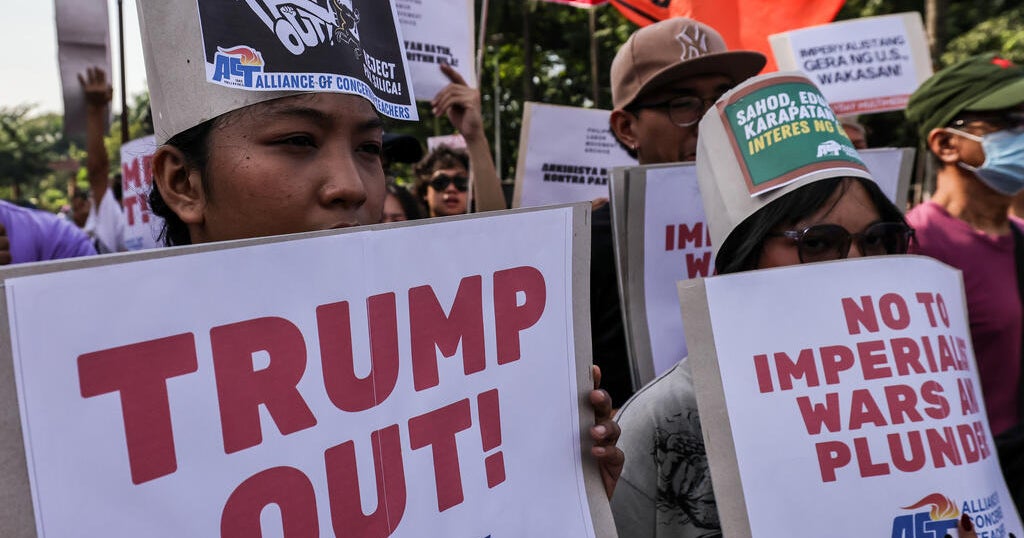
Demonstrators in Manila protested a planned U.S.-led artificial intelligence and manufacturing hub ahead of President Trump's visit, raising concerns over land displacement and foreign dominance.
 🇺🇸US Politics
Photo: CBS Politics
Key points
- Protesters in Manila rallied against a U.S.-led AI and manufacturing hub planned under the Pax Silica initiative.
- President Ferdinand Marcos Jr. supports the project, citing potential economic growth and thousands of new jobs.
- Critics and Indigenous groups warn the industrial hub will cause land displacement and harm local water supplies.
Demonstrators gathered in Manila on Monday to voice sharp opposition to an upcoming U.S.-led artificial intelligence and manufacturing hub, staging rallies ahead of President Trump’s visit to the Philippines for the ASEAN summit. The proposed 4,000-acre industrial project, located just north of the capital, serves as the inaugural venture for Pax Silica, a Department of State initiative designed to establish non-Chinese supply chains for advanced technology.
Philippine President Ferdinand Marcos Jr. has strongly endorsed the initiative, declaring in October that the project represents a major economic milestone to advance the nation into high-tech manufacturing and research. Administration officials estimate the development could generate up to 130,000 jobs, bringing substantial financial investment into the region.
Conversely, local activists, agricultural workers, and members of the Indigenous Aeta community have condemned the development, warning that it will cause widespread displacement, threaten local water supplies, and deepen foreign economic control. Critics argue the high-tech focus ignores the immediate needs of everyday citizens, while lawmakers note that domestic legislative hurdles remain ahead.
The stakes
The success of the Pax Silica hub hinges on balancing national economic ambitions with local community grievances. If the project proceeds, the Marcos administration secures a vital high-tech partnership with Washington and thousands of new jobs, whereas protesting communities risk losing ancestral lands, agricultural livelihoods, and water security to foreign-backed industrial expansion.
Two readings
- Supporters read the project as a vital economic gateway that modernizes the national economy, secures advanced technology partnerships, and creates substantial employment opportunities.
- Critics read the initiative as a form of foreign imperialism that displaces Indigenous populations, threatens local ecosystems, and benefits external powers at the expense of ordinary citizens.
Source CBS Politics — cbsnews.com/news/protests-philippines-trump-visit-ai-hub/ ↗
Read next
 ✒️Opinion & Analysis
ICJ Rules Myanmar Military Committed Genocide Against Rohingya
The International Court of Justice has found Myanmar's military guilty of genocide against the Rohingya, a ruling that damages the international standing of both Aung San…
 🕯️Democracy & Rights
Chinese teachers face rising parental pressure over personal life choices
Chinese educators are encountering a surge in unreasonable demands from parents, including complaints regarding teachers' pregnancy and maternity leave.
 🛡️War & Security
Ukraine Restricts Media Coverage of Infrastructure Damage Amid Russian Strikes
President Volodymyr Zelenskyy has issued a decree prohibiting media outlets from reporting on the impact of Russian strikes against critical infrastructure and the status…
 🏮China & Taiwan
Beijing Reaffirms Reunification Stance Following Taiwan Local Election Results
China’s Taiwan Affairs Office declared that the island’s reunification with the mainland remains inevitable, despite recent shifts in Taiwan's local political landscape.
 🇪🇺Europe
US Air Force Repels Unauthorized Drone Incursion at RAF Lakenheath
U.S. security forces at a British air base successfully countered a group of unidentified drones, amid growing concerns over potential foreign state involvement.
 ⚖️Law & Policy
India Government Proposes 50% Increase in Parliamentary Seats and Women's Reservation
The Indian government plans to introduce legislation to expand the Lok Sabha to 850 seats and mandate a 33% reservation for women in legislative bodies.