Legal Challenges Against Trump Administration Policies Surpass 1,000 Cases
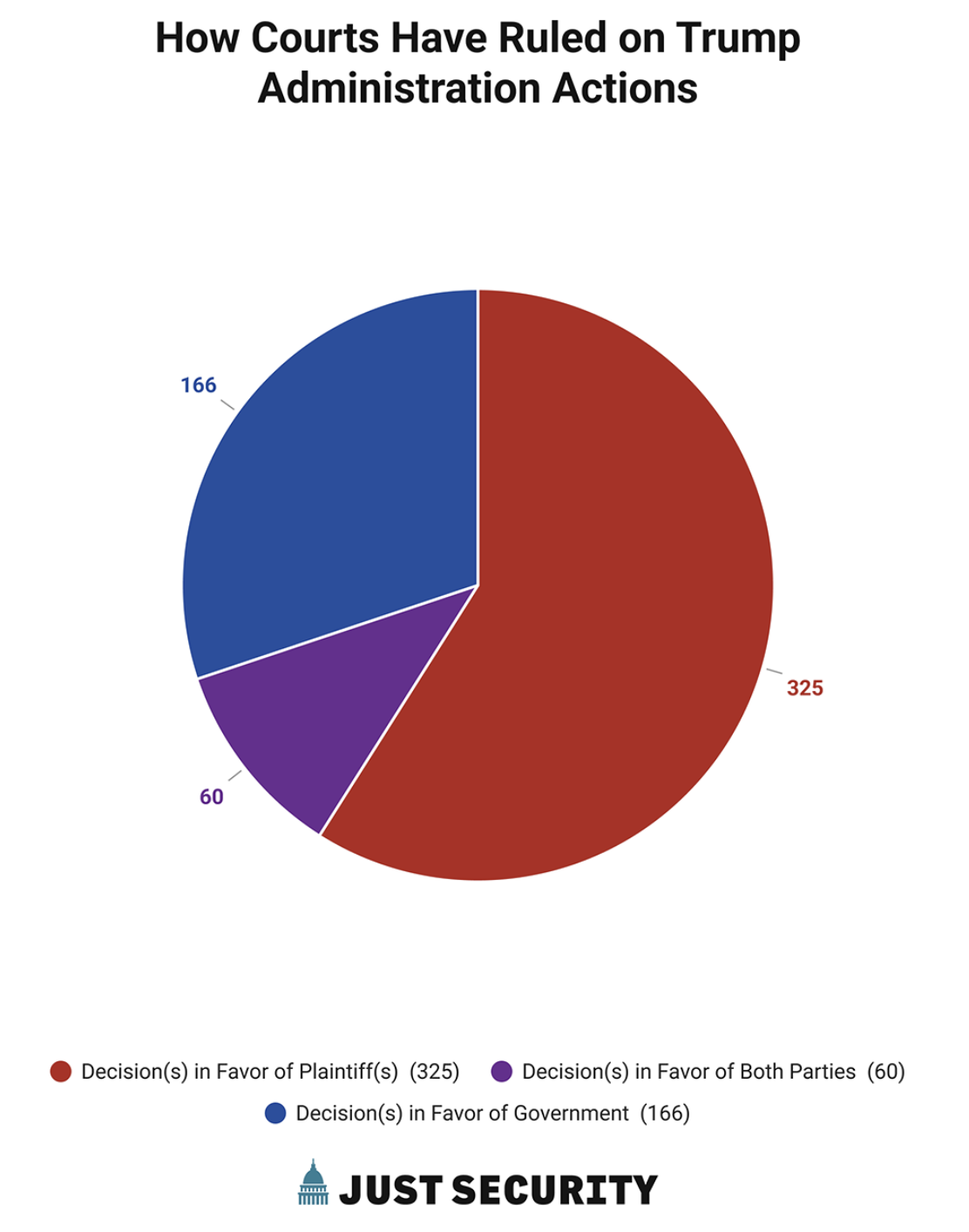
Litigation against the Trump administration has reached a milestone of 1,000 filed cases, with plaintiffs achieving a 66% success rate in securing injunctions against federal actions.
 🇺🇸US Politics
Photo: Just Security
Key points
- Over 1,000 legal cases have been filed against Trump administration policies.
- Plaintiffs have achieved a 66% success rate in blocking government actions through court rulings.
- Environmental and DEI-related policies have faced the highest rates of judicial intervention.
Legal actions challenging policies implemented by the Trump administration have officially surpassed 1,000 cases, marking a significant moment in American judicial history. The litigation, which involves a diverse coalition of private citizens, civil society organizations, and state or local governments, highlights the intense legal scrutiny surrounding federal executive actions.
Data indicates that when courts have issued substantive rulings, plaintiffs have successfully blocked government actions in 66% of instances. This success rate remains consistent across both district and appellate court levels, where plaintiffs have secured temporary restraining orders or preliminary and permanent injunctions in roughly two-thirds of the cases reviewed.
The administration has experienced varying degrees of success depending on the policy area. While the government has prevailed in 51% of cases concerning the structure of government and personnel, it has faced significant judicial pushback in other sectors. Plaintiffs have demonstrated the highest success rates in litigation involving environmental regulations at 83% and initiatives related to diversity, equity, and inclusion at 71%.
The stakes
The high volume of litigation and the frequency of successful injunctions suggest a persistent judicial check on executive authority. If this trend continues, the administration may face significant delays or permanent blocks on its policy agenda, potentially forcing a shift toward more legally defensible regulatory strategies or an increased reliance on legislative cooperation to achieve its goals.
Two readings
- Supporters of the litigation argue that these court rulings are essential for upholding the rule of law and preventing the executive branch from exceeding its constitutional or statutory authority.
- Critics of the litigation suggest that the high success rate of plaintiffs reflects judicial activism and an attempt by political opponents to use the court system to obstruct the democratically elected administration's agenda.
Source Just Security — justsecurity.org/165130/1000-litigation-cases-trump-administration/… ↗
Read next
 ✒️Opinion & Analysis
ICJ Rules Myanmar Military Committed Genocide Against Rohingya
The International Court of Justice has found Myanmar's military guilty of genocide against the Rohingya, a ruling that damages the international standing of both Aung San…
 🕯️Democracy & Rights
Chinese teachers face rising parental pressure over personal life choices
Chinese educators are encountering a surge in unreasonable demands from parents, including complaints regarding teachers' pregnancy and maternity leave.
 🛡️War & Security
Ukraine Restricts Media Coverage of Infrastructure Damage Amid Russian Strikes
President Volodymyr Zelenskyy has issued a decree prohibiting media outlets from reporting on the impact of Russian strikes against critical infrastructure and the status…
 🏮China & Taiwan
Beijing Reaffirms Reunification Stance Following Taiwan Local Election Results
China’s Taiwan Affairs Office declared that the island’s reunification with the mainland remains inevitable, despite recent shifts in Taiwan's local political landscape.
 🇪🇺Europe
US Air Force Repels Unauthorized Drone Incursion at RAF Lakenheath
U.S. security forces at a British air base successfully countered a group of unidentified drones, amid growing concerns over potential foreign state involvement.
 ⚖️Law & Policy
India Government Proposes 50% Increase in Parliamentary Seats and Women's Reservation
The Indian government plans to introduce legislation to expand the Lok Sabha to 850 seats and mandate a 33% reservation for women in legislative bodies.