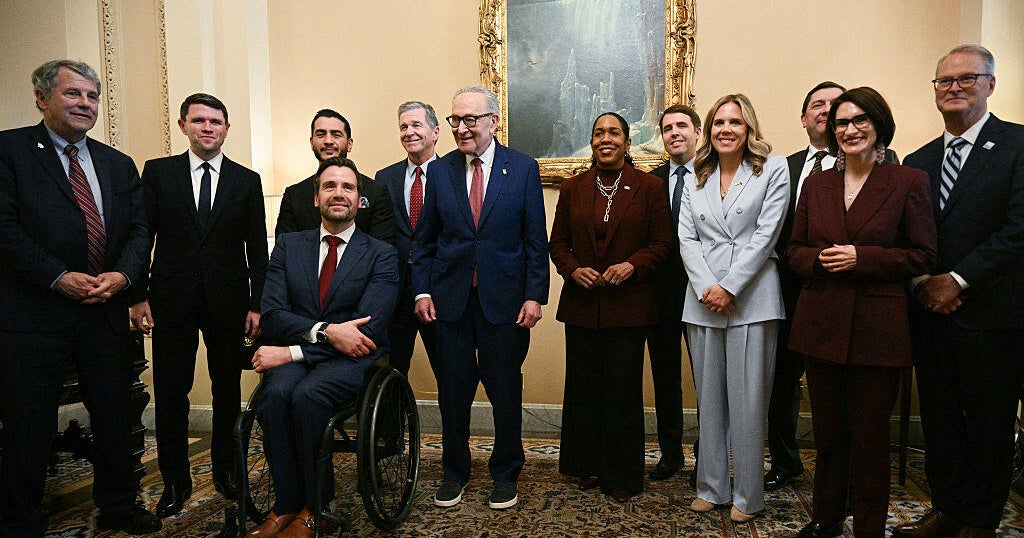
Nineteen New Senators Prepare to Join 120th Congress
The U.S. Senate is set to welcome its largest incoming class in nearly 50 years, featuring a diverse group of members and a slight decrease in the chamber's average age.
 🇺🇸US Politics
Photo: CBS Politics
Key points
- Largest incoming Senate class in nearly 50 years.
- Historical milestones include the first Muslim and first openly gay male senators.
- Democrats flipped key seats in Kansas and South Carolina.
Nineteen new senators are scheduled to be sworn in to the 120th Congress this January, marking the largest influx of new members in almost five decades. This transition follows a series of midterm election results that saw Democrats flip several seats, alongside a wave of retirements from long-serving incumbents. The incoming class is notably younger, with multiple freshmen in their 40s and one in his 30s, effectively lowering the Senate's average age to 63.
The new cohort includes a range of political and professional backgrounds. Notable historical milestones include the election of Abdul El-Sayed in Michigan, who becomes the first Muslim senator in U.S. history, and Chris Pappas of New Hampshire, set to become the first openly gay male senator. Other key victories include Adam Hamilton’s historic win in Kansas, flipping a seat for Democrats for the first time in nearly a century, and pediatrician Annie Andrews, who became the first woman elected to represent South Carolina in the Senate.
The Republican contingent also sees significant shifts, with figures like Andy Barr moving from the House to replace retiring leader Mitch McConnell in Kentucky, and Barry Moore bringing his experience from the House Freedom Caucus to Alabama. Meanwhile, Harriet Hageman, a staunch supporter of former President Trump, will represent Wyoming. These newcomers replace a mix of retiring senators and defeated incumbents, signaling a shift in the legislative composition as the new session begins.
The stakes
The arrival of this large class shifts the ideological balance and demographic makeup of the Senate, potentially impacting legislative priorities on healthcare, economic affordability, and social policy. For the Democratic Party, these gains represent a significant expansion of their influence, while Republicans are recalibrating their Senate presence through new, Trump-aligned members and veteran House representatives.
Two readings
- Supporters view the new class as a necessary infusion of fresh perspectives and younger leadership capable of addressing modern economic and social challenges.
- Critics express concern over the ideological shift, with some warning that the influx of partisan newcomers could exacerbate existing divisions and hinder bipartisan cooperation in the upper chamber.
Source CBS Politics — cbsnews.com/news/meet-the-new-senators-120th-congress/ ↗
Read next
 ✒️Opinion & Analysis
ICJ Rules Myanmar Military Committed Genocide Against Rohingya
The International Court of Justice has found Myanmar's military guilty of genocide against the Rohingya, a ruling that damages the international standing of both Aung San…
 🕯️Democracy & Rights
Chinese teachers face rising parental pressure over personal life choices
Chinese educators are encountering a surge in unreasonable demands from parents, including complaints regarding teachers' pregnancy and maternity leave.
 🛡️War & Security
Ukraine Restricts Media Coverage of Infrastructure Damage Amid Russian Strikes
President Volodymyr Zelenskyy has issued a decree prohibiting media outlets from reporting on the impact of Russian strikes against critical infrastructure and the status…
 🏮China & Taiwan
Beijing Reaffirms Reunification Stance Following Taiwan Local Election Results
China’s Taiwan Affairs Office declared that the island’s reunification with the mainland remains inevitable, despite recent shifts in Taiwan's local political landscape.
 🇪🇺Europe
US Air Force Repels Unauthorized Drone Incursion at RAF Lakenheath
U.S. security forces at a British air base successfully countered a group of unidentified drones, amid growing concerns over potential foreign state involvement.
 ⚖️Law & Policy
India Government Proposes 50% Increase in Parliamentary Seats and Women's Reservation
The Indian government plans to introduce legislation to expand the Lok Sabha to 850 seats and mandate a 33% reservation for women in legislative bodies.