Vance Avoids Endorsing Trump Claim on Iran Nuclear Threat
US Vice-President JD Vance declined to back President Donald Trump's assertion that Iran was on the verge of obtaining a nuclear weapon, following political fallout from recent midterm election defeats.
 🇺🇸US Politics
Photo: Guardian Trump
Key points
- JD Vance declined to endorse Donald Trump's claim that Iran was weeks away from a nuclear weapon.
- Vance previously blamed Republican midterm losses directly on the war with Iran.
- Intelligence assessments from 2025 previously indicated Tehran had not resumed a nuclear weapons program.
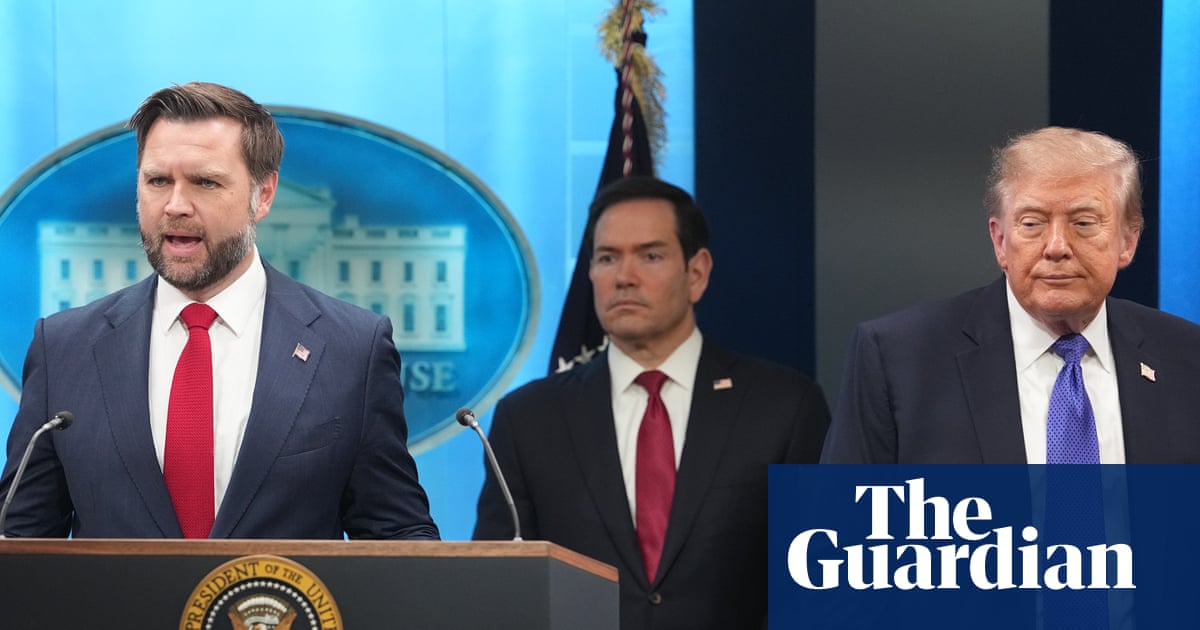
During a White House news conference on Friday, US Vice-President JD Vance stopped short of endorsing President Donald Trump’s claim that Iran was on the verge of developing a nuclear weapon in February, which the administration cited as justification for launching a war. While standing alongside the president in the briefing room, Vance maintained that it was not his position to second-guess executive decisions, despite previously attributing Republican losses in the midterm elections directly to the ongoing conflict.
President Trump stated during the briefing that he found Vance's post-election commentary acceptable, though he maintained that the administration's military actions were entirely necessary to prevent Tehran from acquiring nuclear capabilities. The rationale has drawn public scrutiny due to apparent contradictions with earlier intelligence assessments presented to Congress in March 2025, which indicated that Iran had not resumed an active nuclear weapons program.
When pressed by reporters to defend whether the military campaign and its political costs were justified, Vance avoided directly validating the timeline of the nuclear threat described by the White House. Instead, the vice-president emphasized that stopping a nuclear-armed Iran remains a critical national security imperative, framing his primary duty as supporting the president's ultimate authority rather than debating the prior intelligence.
The stakes
The friction between the executive branch and congressional leadership over the political toll of the war highlights deep fractures within the ruling party, potentially threatening legislative cohesion and administration initiatives as midterm losses shift the balance of power in Washington.
Two readings
- Supporters read the episode as a demonstration of disciplined internal unity, wherein the vice-president respects executive authority while keeping the primary focus on neutralizing a grave international security threat.
- Critics read the exchange as evidence of an unsustainable rift over foreign policy justification and electoral accountability, pointing to unresolved discrepancies between official intelligence and presidential claims.
Source Guardian Trump — theguardian.com/us-news/2026/nov/21/vance-trump-iran-nuclear-weapon ↗
Read next
 ✒️Opinion & Analysis
ICJ Rules Myanmar Military Committed Genocide Against Rohingya
The International Court of Justice has found Myanmar's military guilty of genocide against the Rohingya, a ruling that damages the international standing of both Aung San…
 🕯️Democracy & Rights
Chinese teachers face rising parental pressure over personal life choices
Chinese educators are encountering a surge in unreasonable demands from parents, including complaints regarding teachers' pregnancy and maternity leave.
 🛡️War & Security
Ukraine Restricts Media Coverage of Infrastructure Damage Amid Russian Strikes
President Volodymyr Zelenskyy has issued a decree prohibiting media outlets from reporting on the impact of Russian strikes against critical infrastructure and the status…
 🏮China & Taiwan
Beijing Reaffirms Reunification Stance Following Taiwan Local Election Results
China’s Taiwan Affairs Office declared that the island’s reunification with the mainland remains inevitable, despite recent shifts in Taiwan's local political landscape.
 🇪🇺Europe
US Air Force Repels Unauthorized Drone Incursion at RAF Lakenheath
U.S. security forces at a British air base successfully countered a group of unidentified drones, amid growing concerns over potential foreign state involvement.
 ⚖️Law & Policy
India Government Proposes 50% Increase in Parliamentary Seats and Women's Reservation
The Indian government plans to introduce legislation to expand the Lok Sabha to 850 seats and mandate a 33% reservation for women in legislative bodies.