President Trump Defends Personal Intervention in Nvidia Leadership Decision
President Donald Trump defended his personal intervention to secure the reinstatement of Nvidia CEO Jensen Huang, stating that presidential involvement in private corporate leadership is a matter of intuition rather than formal rules.
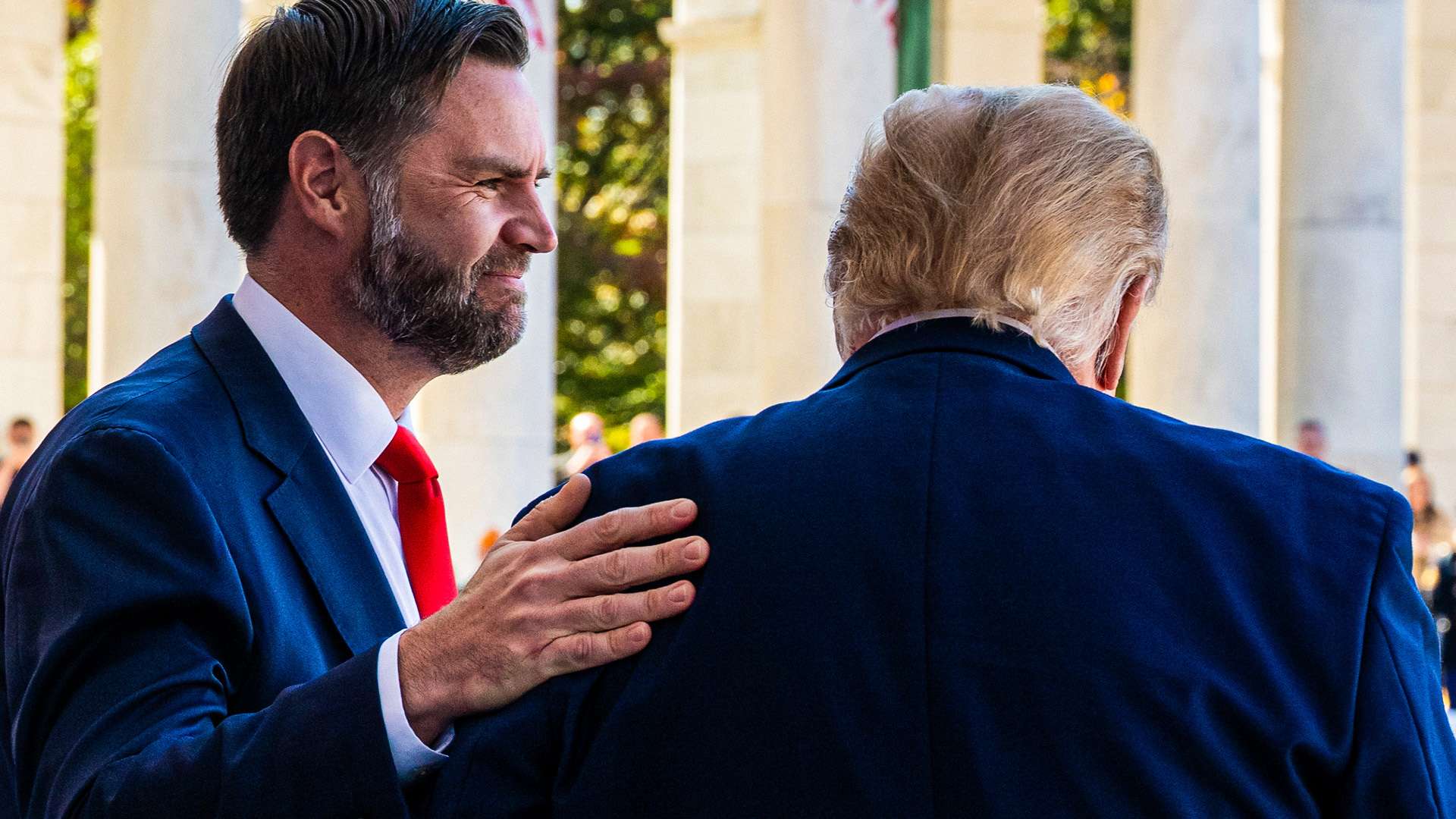 🇺🇸US Politics
Photo: Reason
Key points
- President Trump defended his intervention in Nvidia's leadership changes
- The administration rejected the need for formal formulas governing executive involvement in private firms
- Critics raised concerns over executive overreach and selective enforcement of security standards
President Donald Trump stated on Monday that he sees no clear boundary limiting executive intervention in private technology companies, defending his direct role in returning Jensen Huang to the position of Nvidia CEO. Speaking in a television interview, the president likened presidential decision-making regarding corporate governance to a matter of instinct and feel, remarking that he felt strongly about keeping Huang at the helm to protect economic interests.
The intervention has drawn scrutiny over the boundaries of executive power and the increasing entanglement of the federal government in private enterprise. Critics have contrasted the administration's willingness to pressure corporate boards with its aggressive enforcement stance on immigration and trade, pointing out a double standard in how national security and regulatory rules are applied across different sectors.
Supporters of the administration's approach argue that proactive executive engagement is necessary to safeguard critical technological leadership and maintain American market competitiveness. However, policy analysts warn that the growing politicization of the technology sector risks subordinating corporate governance to political priorities, potentially harming long-term stability and innovation.
The stakes
If presidential intervention in private corporate leadership becomes normalized, corporate boards may increasingly cater to political figures rather than shareholders, while technology firms could face heightened regulatory uncertainty and politicization.
Two readings
- Supporters read the intervention as a pragmatic and decisive defense of critical American technological leadership against potential economic disruption.
- Critics read the move as an arbitrary overreach that blurs the line between public authority and private enterprise while applying selective standards of national security.
Source Reason — reason.com/2026/11/24/no-meaningful-distinction-between-public-and-priv… ↗
Read next
 ✒️Opinion & Analysis
ICJ Rules Myanmar Military Committed Genocide Against Rohingya
The International Court of Justice has found Myanmar's military guilty of genocide against the Rohingya, a ruling that damages the international standing of both Aung San…
 🕯️Democracy & Rights
Chinese teachers face rising parental pressure over personal life choices
Chinese educators are encountering a surge in unreasonable demands from parents, including complaints regarding teachers' pregnancy and maternity leave.
 🛡️War & Security
Ukraine Restricts Media Coverage of Infrastructure Damage Amid Russian Strikes
President Volodymyr Zelenskyy has issued a decree prohibiting media outlets from reporting on the impact of Russian strikes against critical infrastructure and the status…
 🏮China & Taiwan
Beijing Reaffirms Reunification Stance Following Taiwan Local Election Results
China’s Taiwan Affairs Office declared that the island’s reunification with the mainland remains inevitable, despite recent shifts in Taiwan's local political landscape.
 🇪🇺Europe
US Air Force Repels Unauthorized Drone Incursion at RAF Lakenheath
U.S. security forces at a British air base successfully countered a group of unidentified drones, amid growing concerns over potential foreign state involvement.
 ⚖️Law & Policy
India Government Proposes 50% Increase in Parliamentary Seats and Women's Reservation
The Indian government plans to introduce legislation to expand the Lok Sabha to 850 seats and mandate a 33% reservation for women in legislative bodies.