President Trump Intervenes in Nvidia Leadership, Raising Conflict of Interest Concerns
President Donald Trump has faced criticism for pressuring the Nvidia board to reinstate CEO Jensen Huang, despite national security warnings regarding Huang's associations with Chinese intelligence assets.
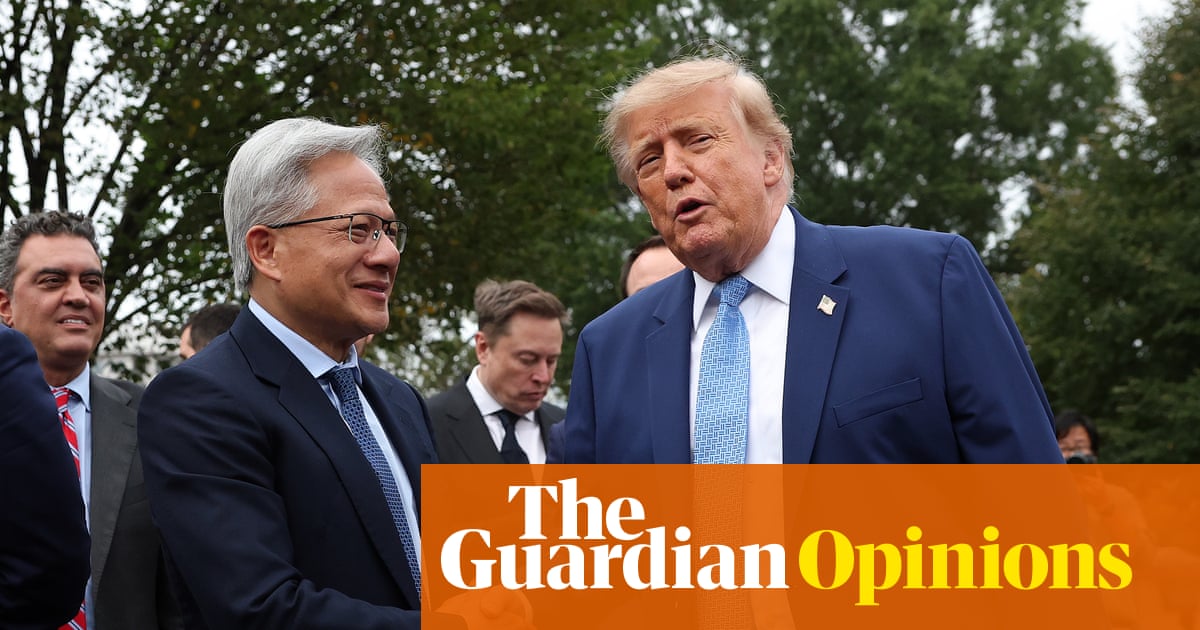 🇺🇸US Politics
Photo: Guardian US Politics
Key points
- President Trump pressured the Nvidia board to reinstate CEO Jensen Huang.
- The administration cleared Huang of national security concerns despite warnings from Secretary of State Marco Rubio.
- Critics highlight a conflict of interest due to Trump's personal stock holdings in Nvidia.
President Donald Trump recently intervened in the corporate governance of Nvidia, successfully pressuring the company's board to reinstate CEO Jensen Huang. The move followed a sharp decline in Nvidia's stock value, which had plummeted after reports linked Huang to Alice Huang, a woman allegedly connected to Chinese intelligence services. Critics argue the President's involvement constitutes a significant conflict of interest, as Trump holds substantial personal investments in the company, which regained significant market value following the CEO's return.
The administration reportedly provided assurances to the Nvidia board that Jensen Huang was not under investigation and did not pose a national security risk, despite written warnings from Secretary of State Marco Rubio. These concerns centered on reports that Nvidia’s advanced AI chips were being diverted to China through third-party entities linked to Alice Huang. The administration's intervention has sparked debate over the separation of executive power and the judicial process, as well as the consistency of the President's stance on China.
The stakes
The President's direct involvement in private corporate leadership sets a precedent that could erode the independence of the American justice system and fuel perceptions of cronyism. By prioritizing the reinstatement of a tech leader despite security flags, the administration risks undermining national security protocols and weakening the government's credibility in regulating the critical AI sector against foreign influence.
Two readings
- Supporters view the intervention as a necessary move to stabilize a vital American technology firm and ensure the nation maintains its competitive edge in the global AI race.
- Critics contend the action demonstrates a dangerous disregard for the rule of law, prioritizing personal financial gain and corporate alliances over national security and institutional integrity.
Source Guardian US Politics — theguardian.com/commentisfree/2026/nov/27/donald-trump-destroying-u… ↗
Read next
 ✒️Opinion & Analysis
ICJ Rules Myanmar Military Committed Genocide Against Rohingya
The International Court of Justice has found Myanmar's military guilty of genocide against the Rohingya, a ruling that damages the international standing of both Aung San…
 🕯️Democracy & Rights
Chinese teachers face rising parental pressure over personal life choices
Chinese educators are encountering a surge in unreasonable demands from parents, including complaints regarding teachers' pregnancy and maternity leave.
 🛡️War & Security
Ukraine Restricts Media Coverage of Infrastructure Damage Amid Russian Strikes
President Volodymyr Zelenskyy has issued a decree prohibiting media outlets from reporting on the impact of Russian strikes against critical infrastructure and the status…
 🏮China & Taiwan
Beijing Reaffirms Reunification Stance Following Taiwan Local Election Results
China’s Taiwan Affairs Office declared that the island’s reunification with the mainland remains inevitable, despite recent shifts in Taiwan's local political landscape.
 🇪🇺Europe
US Air Force Repels Unauthorized Drone Incursion at RAF Lakenheath
U.S. security forces at a British air base successfully countered a group of unidentified drones, amid growing concerns over potential foreign state involvement.
 ⚖️Law & Policy
India Government Proposes 50% Increase in Parliamentary Seats and Women's Reservation
The Indian government plans to introduce legislation to expand the Lok Sabha to 850 seats and mandate a 33% reservation for women in legislative bodies.